

Artificial food dyes have long been a staple in baking, but many people are now turning to natural alternatives. Why? Beyond avoiding synthetic additives, natural food coloring offers subtle flavors, added nutrients, and peace of mind for those following clean eating principles. Plus, making your own natural dyes is simple, fun, and lets you use ingredients you likely already have in your pantry!
Benefits of Using Natural Food Coloring
- Nutrient-Rich: Many natural food colors, like beet juice and spirulina, add vitamins and antioxidants to your recipes.
- No Artificial Additives: Avoid the health concerns linked to synthetic dyes by sticking with pure, whole-food ingredients.
- Customizable Shades: Mix and match colors for endless creativity—perfect for cookies, cakes, or savory dishes.
- Eco-Friendly: Reduce your reliance on processed products and embrace the sustainable use of whole foods.

How Ingredients in Natural Food Coloring Support Longevity
Beets (Whole Beets and Beet Powder)
- Beets are rich in betalains, powerful antioxidants that fight inflammation and oxidative stress, both of which are linked to aging.
- High in nitrates, beets improve blood flow and support cardiovascular health, delivering oxygen and nutrients to your body efficiently.
- Their detoxifying properties aid liver health, promoting the body’s natural cleansing processes.
Spirulina (Green & Blue)
- Spirulina is a nutrient-dense superfood packed with protein, B vitamins, and phycocyanin, an antioxidant that combats cellular damage.
- It’s known to support immune health and reduce inflammation, helping to delay the onset of chronic diseases.
- Spirulina may also enhance endurance and recovery, supporting an active, longevity-focused lifestyle.
Saffron
- Saffron is rich in crocin and safranal, antioxidants that protect against oxidative damage and reduce inflammation.
- Studies have linked saffron to improved mood and cognitive function, potentially delaying age-related mental decline.
- It’s also known to support eye health, helping prevent age-related macular degeneration.
Wild Blueberries
- Wild blueberries are a top source of anthocyanins, antioxidants that protect brain cells from aging and support memory.
- They combat oxidative stress and inflammation, both of which are drivers of aging.
- Regular consumption is associated with improved cardiovascular health and reduced risk of chronic diseases.
Spinach
- Spinach is loaded with chlorophyll, which supports detoxification and reduces inflammation.
- It’s high in vitamins A, C, and K, promoting bone health, immune support, and healthy skin.
- Spinach is also a source of lutein and zeaxanthin, which protect against vision loss as you age.
Pomegranate Powder
- Pomegranates are rich in polyphenols, particularly ellagic acid, which has anti-aging and anti-inflammatory effects.
- Known for supporting heart health, pomegranates reduce oxidative damage to arteries and improve blood flow.
- They may also have benefits for skin elasticity and hydration, promoting a youthful glow.
Aronia Berries
- Aronia berries contain high levels of anthocyanins and polyphenols, which fight free radicals and reduce inflammation.
- They’re associated with improved cardiovascular health and better blood sugar regulation, key factors in longevity.
- Their antioxidant content supports immune health and reduces cellular damage.
Activated Charcoal
- Activated charcoal has detoxifying properties, helping remove toxins from the body.
- While not a direct longevity booster, its ability to support the body’s natural cleansing processes can complement a healthy lifestyle.
Cocoa
- Cocoa powder is rich in flavanols, antioxidants that promote brain function, cardiovascular health, and skin elasticity.
- Its anti-inflammatory properties help combat aging-related diseases.
- Cocoa also supports the release of endorphins and improves mood, contributing to mental well-being.

Step-by-Step Instructions for Natural Food Coloring
Make a batch of sugar free vegan royal icing. These colors will also work well in other types of icing.
Coloring Instructions
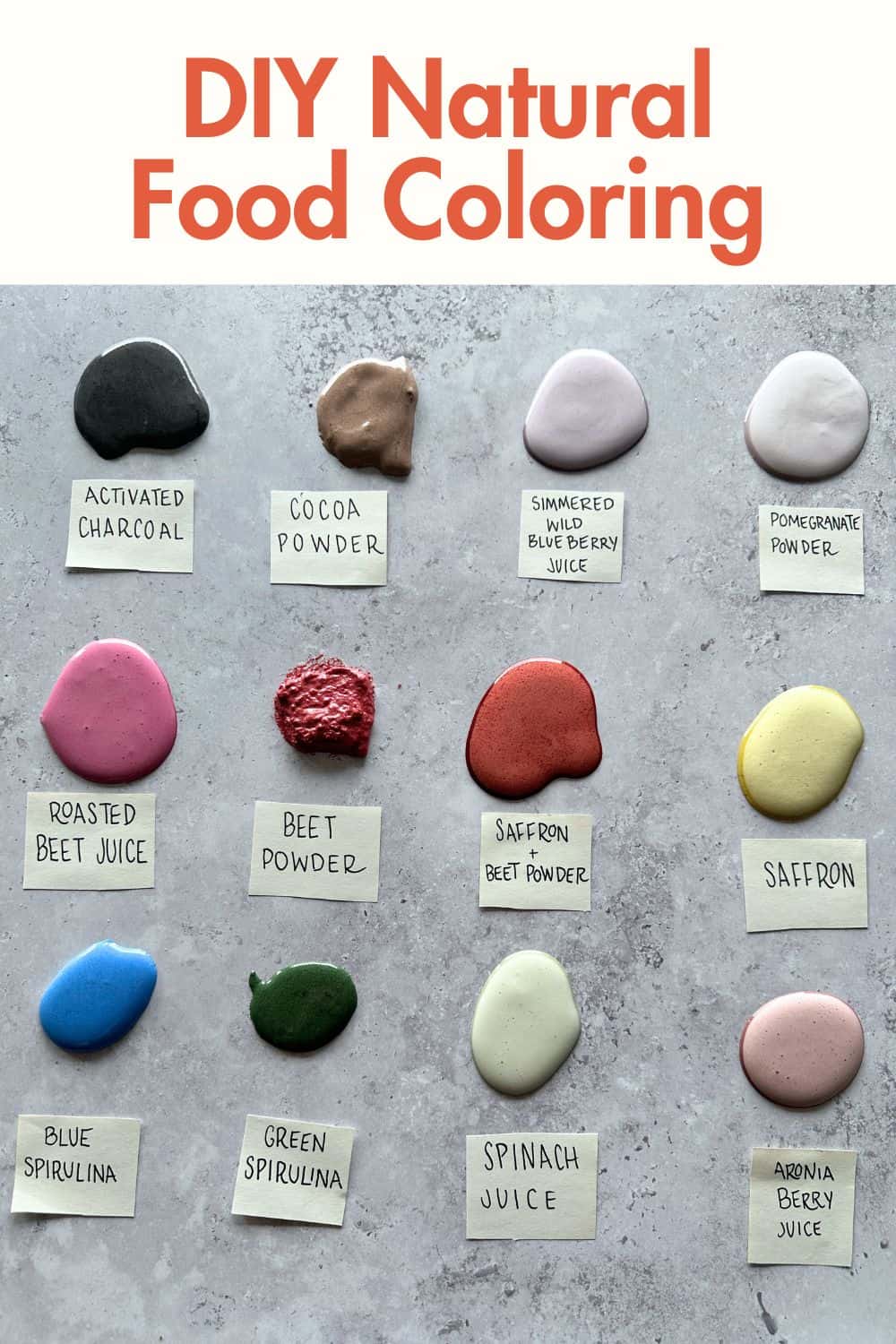
- Red (Roasted Beet Juice): Roast a beet, grate it, and strain the juice. Add 1/4 tsp juice per 3 tbsp frosting.
- Pink (Beet Powder): Dissolve 1/4 tsp beet powder in water and mix into frosting.
- Orange (Saffron + Beet Powder): Steep saffron in warm water, then combine with beet powder for a warm orange hue.
- Yellow (Saffron): Steep saffron strands in warm water and mix into frosting.
- Green (Spinach Juice): Blend spinach with water, strain the juice, and mix into frosting.
- Blue (Blue Spirulina): Mix 1/4 tsp blue spirulina powder directly into frosting.
- Purple (Wild Blueberries): Simmer blueberries, strain, and mix juice into frosting.
- Black (Activated Charcoal): Mix 1/4 tsp activated charcoal powder into frosting.
- Brown (Cocoa): Dissolve cocoa powder in water and mix into frosting.

Recipe FAQs
1. Can I freeze the frosting after coloring it?
Yes, you can freeze naturally colored frosting in an airtight container for up to 3 months. Let it thaw at room temperature and whip it again.
2. Will the natural colors fade over time?
Natural dyes can fade slightly if exposed to light or air for extended periods. For best results, apply the frosting soon after coloring.
3. Can I use these colors for savory dishes?
Absolutely! These natural colors work well in savory recipes, like beet-colored pasta or turmeric rice. Just don’t add them to frosting!

Natural Food Coloring
Ingredients
Red - Beet Powder
- 1/4 tsp beet powder
- 1/2 tsp water or lemon juice
Pink - Roasted Beet Juice
- 1 small beet roasted
- Water for juicing
Light Pink / Purple - Aronia Berries
- 1/4 cup aronia berries
- Water for blending
Orange - Saffron + Beet Powder
- A pinch of saffron strands
- 1/4 tsp beet powder
- 1 tsp warm water
Yellow - Saffron
- A pinch of saffron strands
- 1 tsp warm water
Light Purple - Wild Blueberries
- 1/4 cup wild blueberries
- 1 tbsp water
Light Green - Spinach
- A handful of fresh spinach
- Water for blending
Green - Spirulina
- 1/4 tsp green spirulina powder
Blue - Blue Spirulina
- 1/4 tsp blue spirulina powder
Black - Activated Charcoal
- 1/4 tsp activated charcoal powder
Brown - Cocoa
- 1/4 tsp cocoa powder
- 1/2 tsp water
Light Pink - Pomegranate
- 1/4 tsp pomegranate powder
Instructions
Red - Beet Powder
- Mix 1/4 tsp beet powder with 1/2 tsp water or lemon juice to form a smooth paste.
- Stir the paste into 3 tbsp frosting until fully combined.
Pink - Roasted Beet Juice
- Roast a small beet at 400°F for ~40 minutes until tender.
- Grate the beet, then squeeze the gratings through a cheesecloth.
- Add 1/4 tsp beet juice to 3 tbsp frosting and mix well.
Light Pink / Purple - Aronia Berries
- Blend 1/4 cup aronia berries with a splash of water.
- Strain the puree through a cheesecloth to extract juice.
- Mix 1/4 tsp aronia juice into 3 tbsp frosting.
Orange - Saffron + Beet Powder
- Steep a pinch of saffron strands in 1 tsp warm water for 10 minutes.
- Mix 1/4 tsp saffron liquid with 1/4 tsp beet powder paste (prepared as in the beet powder instructions).
- Stir into 3 tbsp frosting.
Yellow - Saffron
- Steep a pinch of saffron strands in 1 tsp warm water for 10 minutes.
- Mix 1/4 tsp saffron liquid into 3 tbsp frosting.
Light Purple - Wild Blueberries
- Simmer 1/4 cup wild blueberries with 1 tbsp water over low heat for 5 minutes.
- Strain the mixture through a cheesecloth to extract the juice
- Stir 1/4 tsp blueberry juice into 3 tbsp frosting.
Light Green - Spinach
- Blend a handful of fresh spinach with a small amount of water.
- Strain through a cheesecloth to extract the juice.
- Mix 1/4 tsp spinach juice into 3 tbsp frosting.
Green - Spirulina
- Mix 1/4 tsp green spirulina powder directly into 3 tbsp frosting.
Blue - Blue Spirulina
- Mix 1/4 tsp blue spirulina powder directly into 3 tbsp frosting.
Black - Activated Charcoal
- Mix 1/4 tsp activated charcoal powder directly into 3 tbsp frosting.
Brown - Cocoa
- Dissolve 1/4 tsp cocoa powder in 1/2 tsp water to make a paste.
- Stir the paste into 3 tbsp frosting.
Light Pink - Pomegranate
- Mix 1/4 tsp pomegranate powder with 3 Tbsp of frosting